
Press spin on a licensed British casino site and at least four separate businesses have touched that result before the reels stop: the operator running your account, the studio that wrote the maths, a hosting company serving the game, and an approved test house that signed off the build. Most casino guides skip that chain entirely. We think it is the most useful thing to understand, because every protection you actually rely on lives somewhere inside it.
This guide takes online casinos apart the way we would take apart a graphics card: component by component, with the paperwork that governs each one. It covers how random outcomes are certified, what happens when a game gets updated, how a live dealer studio is policed, what security audits exist, and then how you can use all of that to judge a site from the outside.
Spec sheet
- Regulator
- Gambling Commission (Great Britain)
- Rulebook for game software
- Remote gambling and software technical standards (RTS 1 to RTS 17, plus security requirements)
- Who certifies games
- Approved test houses; 14 on the Commission’s list dated 2 March 2026
- Security baseline
- Annual independent audit against controls drawn from ISO/IEC 27001:2022
- Minimum game cycle
- 2.5 seconds (slots); 5 seconds (other casino games)
- Minimum RTP
- None set in law; the displayed figure must match the certified build
- Dispute route
- Operator complaint (up to 8 weeks), then an approved ADR body
- Age
- 18+, verified before any play, including free demos
What actually runs when you open a casino lobby?
A British casino website is a front end bolted onto several systems that are often owned by different companies. The operator holds the relationship with you: registration, age and identity checks, the wallet, deposit limits, self-exclusion and complaints. The games themselves usually come from outside. A studio builds the maths and the graphics; a platform or aggregator plugs dozens of studios into the operator’s lobby through one integration; and in many cases the game runs on the supplier’s own servers, with the operator’s site simply displaying it.
That split matters because the law gives each layer its own licence. Section 41 of the Gambling Act 2005 makes it an offence to manufacture, supply, install or adapt gambling software in the course of a business without an operating licence. The Commission’s guidance treats game developers, platform providers, adapters and aggregators that supply licensed operators as needing that gambling software licence. A software business that hosts casino games on its own servers for other operators’ customers, without contracting with those players itself, needs a separate remote casino game host licence on top.
| Layer | What it does | Permission it runs under | What you can see |
|---|---|---|---|
| Operator (B2C) | Your account, wallet, verification, limits, GAMSTOP checks, complaints | Remote casino operating licence | Company name in the terms; account number and domain on the register |
| Game studio | Game rules, paytables, RTP configuration, client code | Gambling software licence | Studio name on the loading screen or in the game rules |
| Aggregator or platform | Connects many studios to one lobby; can install or adapt software | Gambling software licence where it supplies, installs or adapts | Rarely visible to players |
| Remote game server | Hosts the game and generates results for other operators’ customers | Gambling software licence plus remote casino game host licence | Nothing on screen; the register lists game host licensees |
| Test house | Checks RNG, maths and code before release; audits monitoring yearly | Approval from the Commission | Not usually shown; reports go to the regulator |
The practical upshot: when a casino brand says its games are “fair”, what it really means is that a licensed supplier built them, an approved lab tested the exact build, and the operator is responsible for running that build and nothing else. The brand name on the homepage is the thinnest layer of the lot.
Who is allowed to build and supply the software?
Operators cannot pick up any game they like from anywhere. Licence condition 2.2.1 of the Licence Conditions and Codes of Practice (LCCP) requires that gambling software used by a remote casino licensee was made by the holder of a gambling software operating licence and supplied to it by one as well. A brilliant slot from an unlicensed studio simply cannot appear in a licensed lobby unless a licensed business takes responsibility for supplying it.
The Commission’s definition of gambling software is narrower than “anything a casino uses”. It covers software used in connection with remote gambling that affects fairness: systems that accept transactions, determine results and allocate winnings, random number generation, and the records showing game results. General office software, analytics packages, affiliate tools and CRM systems sit outside it.
You can get a feel for the scale from the register itself. The Commission publishes its business register as downloadable CSV files covering businesses, licences, trading names and domain names. In the download we pulled on 16 September 2026:
- 139 accounts held an active remote casino activity.
- 261 accounts held an active gambling software activity.
- 83 accounts held an active casino game host activity.
- 31 accounts held both remote casino and gambling software permissions, combining the consumer-facing and supplier roles under one account.
Those numbers shift as licences are granted, varied and surrendered, and the Commission notes that it cannot guarantee the accuracy of details provided by third parties, such as the domain and trading name lists businesses supply. As a snapshot, though, it shows the shape of the market: far more companies supply the machinery than run consumer casinos.
How does an RNG get certified before release?
The core rule is RTS 7, which requires random number generation and game results to be “acceptably random”. The Commission defines that as being able to show, to a high degree of confidence, that outputs are random, typically through statistical testing. Its implementation guidance then lists the properties a software RNG has to demonstrate:
- Output is uniformly distributed across the full range, and game outcomes occur at their theoretical probabilities.
- Output cannot feasibly be predicted without knowing both the algorithm and the seed.
- The RNG does not repeat its output stream, and two instances do not produce the same stream.
- Seeding and re-seeding do not introduce predictability.
- Scaling the raw numbers into game results (say, a reel position or a card) keeps all of the above intact.
Before a new game or RNG goes live, an approved test house has to check it. Under the Commission’s testing strategy the lab performs statistical analysis of the RNG and its outputs, and examines the game itself through maths verification, source code analysis and game play. The resulting test report must name the lab and the supervisor who signed it off, the licensee, the game name, its RTP, its software number and its digital signature, the scope of testing, and which game clients were covered. Licensees upload it to the Commission before release.
That digital signature in the report is the neat part from a systems point of view. It fingerprints the exact build that was tested. If the code running on the server does not match, it is not the certified game, whatever the title screen says.
The labs are a short list. The Commission’s approved test house page, dated 2 March 2026, names 14 entities cleared for remote testing, several of them regional arms of the same testing groups. To qualify, a lab needs full accreditation to BS EN ISO/IEC 17025 and meet selected requirements from ISO/IEC 17065 and ISO/IEC 27002.

What happens when a game is updated?
Games get patched like any other software, and the Commission has a clear line on which patches need a lab to look again. Its testing strategy splits changes into major and minor updates. A major update is any software change that may affect the fairness of a game, which includes changes to the RNG, to scaling and mapping, or to the game rules and how they are implemented in code. Those need retesting by an approved test house. Everything else can be released on the licensee’s own change control, and where there is doubt the Commission expects the licensee to talk to the original lab.
The worked examples in the strategy read a lot like patch notes, which we appreciated.
| Change | Classification | Why |
|---|---|---|
| Rebuilding how the symbol array is constructed to cut CPU load, rules unchanged | Major | The software implementation of the game changed |
| Fixing a bonus round win calculation for a scenario that was missed | Major | Directly alters what the game pays |
| Changing the sound file format for iOS compatibility | Minor | No game logic touched |
| Changing a character’s hat colour or the background art | Minor | Cosmetic only |
| Realigning the stake dialog or moving a button | Minor | Display change with no effect on outcomes |
The first example is the one worth remembering. Even an optimisation that leaves every rule identical counts as major, because the code that produces results is different. The regulator treats the running code as the thing being certified.
Rules and paytables are also protected while a game is running. RTS 3 says rules, payouts and outcome probabilities may not change while a game is available for play, except as the game rules themselves provide. Changes should be made with the game taken offline or suspended, and an altered game should carry a notice such as “rules changed” or “different payouts” on the selection screen.
Then there is an annual check on the whole process. Licensees that develop or update games and RNGs, or that have taken on responsibility for external testing, must have an approved test house audit them every year. The audit samples major and minor updates to confirm they were classified correctly, checks change control and the list of games available, and looks at how well live RTP monitoring works. The result is counter-signed by the relevant personal management licence holder and sent to the Commission.
How is a game watched once it is live?
Certification proves a build is fair on the bench. Live RTP monitoring checks it stays that way in production, where integration bugs, platform faults and misconfigured versions can appear. The Commission requires licensees to monitor for both underpayment and overpayment, and says the main method should be simple: divide total wins by total turnover to get the actual RTP, then compare it with the RTP the game advertises.
The tricky bit is deciding how far from the advertised figure is too far. Short samples swing wildly, so the Commission’s guidance sets tolerance using the game’s volatility and a 95% confidence interval. Its own worked example uses a game with a theoretical RTP of 91.68% and a standard deviation of 5.6. Here is how much room that game gets as play accumulates.
| Game cycles measured | Allowed deviation | Acceptable actual RTP |
|---|---|---|
| 50,000 | ± 4.91 points | 86.77% to 96.59% |
| 100,000 | ± 3.47 points | 88.21% to 95.15% |
| 400,000 | ± 1.74 points | 89.94% to 93.42% |
| 1,000,000 | ± 1.10 points | 90.58% to 92.78% |
(Ranges calculated by us from the Commission’s tolerance figures; its own text rounds the 400,000 case to 1.75 either side, giving 89.93% to 93.43%.)
Two details in that guidance tell you a lot about how seriously the maths is taken. First, a fault-free game will still land outside the range roughly once in every 20 tests at 95% confidence, so an alert triggers an investigation rather than an automatic verdict. Second, the Commission warns against measuring at too high a level. Play at maximum stake can drown out a fault at minimum stake, a bug can exist in one channel only, and a bonus feature or progressive jackpot can hide problems in the base game. It suggests measuring bet levels, channels, features and jackpot components separately where the design calls for it, with measurement ideally running automatically in the back end, often daily on rolling 30-day volumes.
A slot’s RTP is a promise about millions of spins, and live monitoring is the only part of the system that keeps checking the promise after launch.
For the player, this is also why a single bad evening proves nothing. A tolerance of nearly five points either way at 50,000 cycles tells you how noisy results are even across a sample far larger than any one person will ever play. We go deeper on volatility and RTP versions in our slots sites guide.
How are live dealer studios policed?
Live casino replaces the software RNG with physical equipment: a real wheel, a real shoe of cards, a human dealer, and cameras feeding a stream into the operator’s interface. The randomness is mechanical, so the controls shift from code review to how the room is run. RTS 17 covers live dealer studios with one headline requirement: operations must be fair and independently auditable.
The implementation guidance fills that in with what reads like a casino floor manual:
- Equipment and consumables should be of commercial casino quality, with designated staff monitoring their integrity.
- Croupiers should be trained in fair dealing to documented procedures, and training records kept.
- Supervisors should oversee dealer conduct and game integrity.
- Video surveillance should record all dealer activity in enough detail to confirm procedures and rules were followed.
- Secure areas, equipment and consumables should have access controls so only authorised staff get near them.
- Game logs should be kept and collated into statistics that can reveal trends by game, staff member or table position.
RTS 7 adds rules for mechanical randomness generally: the components must not be easy to tamper with, their physical properties must not be altered, and players should have no way to interact with or manipulate the mechanics. On the testing side, the Commission’s strategy says licensees running live dealer operations must seek independent assurance that the operation meets the requirements.

What if the stream drops?
Connections fail, and RTS 10 sets out how interrupted gambling should be handled so that it does not systematically disadvantage customers. If the outcome was already determined when the interruption happened, the result stands. If the stake was taken but no outcome was generated, the stake should be returned. For multi-stage games the operator must take reasonable steps to restore the last known state, and systems must keep enough information (cards dealt, jackpot values, betting state) to do that. Operators also have to publish information on how common interruption scenarios are treated, so the answer to “what happens if my Wi-Fi dies mid-hand” should be findable in the rules before you play.
What protects the account and the data?
Fair games are half the job. The other half is the vault: your balance, your identity documents, your payment details, and the records of every result. The RTS security requirements take controls from ISO/IEC 27001:2022 and group them into organisational, people, physical and technological areas. Among the technological controls referenced are secure authentication, privileged access rights, use of cryptography, information backup, network security and change management.
The scope is defined by what the systems handle. It takes in anything that stores, processes or moves sensitive customer data, with card numbers, login credentials and balances given as examples; the systems that generate random numbers; the systems that store game results and track the state of a customer’s gamble; the points of entry to and exit from those systems; and the communication networks carrying that data.
Compliance is checked by an annual security audit. Licensees must use a third-party auditor that is reputable, suitably qualified to test against ISO/IEC 27001:2022, and independent of the licensee. The Commission does not approve security audit firms itself. The audit stays on file, and the licensee must hand over a copy of the full report within 7 days if the Commission asks for it.
Data protection law sits on top. Under UK GDPR, a notifiable personal data breach must be reported to the Information Commissioner’s Office without undue delay and no later than 72 hours after the organisation becomes aware of it.
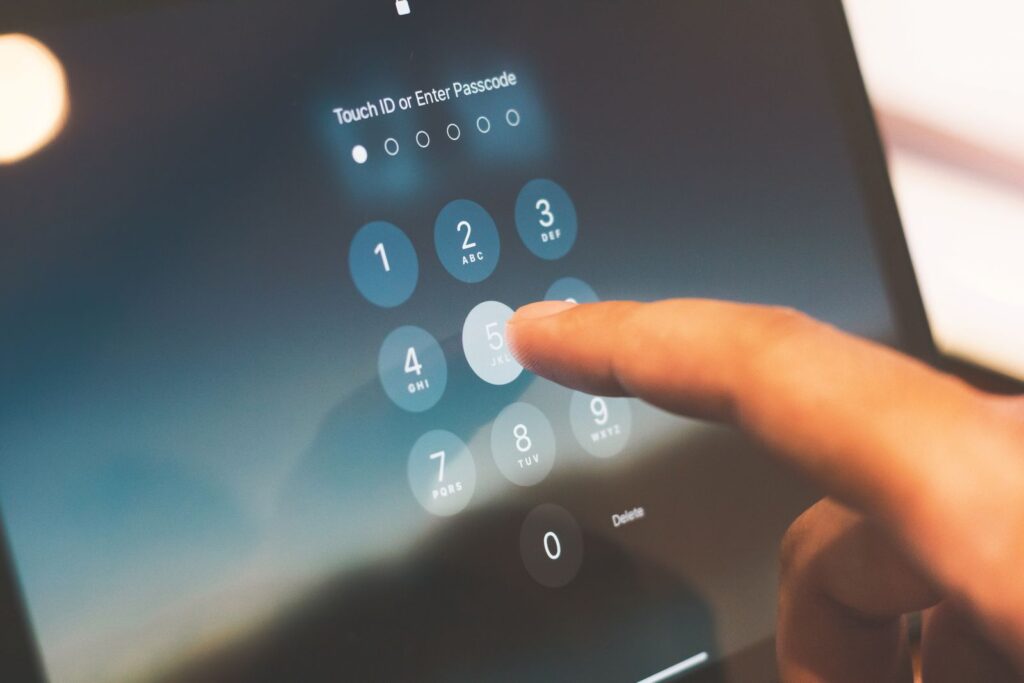
Your end of the deal
We could not find a Commission rule that requires casinos to offer two-factor login to players, so treat it as good practice rather than a legal expectation. The National Cyber Security Centre recommends turning on 2-step verification for important accounts wherever it is offered, and a gambling account holding money and ID documents qualifies. The NCSC also stresses protecting your email account first, because anyone in your inbox can reset passwords everywhere else.
- Use a unique password for each casino account, stored in a password manager.
- Switch on 2-step verification if the site offers it.
- Type the address yourself or use a bookmark; do not log in through links in messages.
- Check the login and cashier pages run over HTTPS on the domain listed on the register.
- Review the transaction history the site must provide under RTS 2 now and then, so you would notice anything odd.
Which player-facing rules the platform enforces
Several of the most visible rules at British casinos are really platform features. The technical standard says what the software must or must not do, and the operator’s system implements it for every game in the lobby. Here are the main rules in date order.
- 7 May 2019 Age and identity must be verified before a customer can deposit or gamble, and before they can use free-to-play versions of the operator’s games.
- 31 Mar 2020 Every online licensee must be part of GAMSTOP and refuse registered customers.
- 14 Apr 2020 No gambling on credit cards, including e-wallets funded by credit card.
- 31 Oct 2021 Slots: autoplay removed, each game cycle lasts 2.5 seconds or longer, turbo and slam stop gone, win effects barred when the payout does not beat the stake, and session spend and time shown on screen. Reverse withdrawals banned across remote gambling.
- 17 Jan 2025 Other casino games: minimum 5 seconds per game cycle, autoplay banned across online casino games, and no functionality for playing several casino games at once.
- 9 Apr 2025 Slot stake capped at £5 per spin for customers aged 25 and over.
- 21 May 2025 Slot stake capped at £2 per spin for customers aged 18 to 24.
- 31 Oct 2025 Newly registered customers must be asked to choose a financial limit before paying in for the first time. A higher limit only applies after a cooling-off period of 24 hours or more plus a second confirmation; a lower one applies straight away.
- 19 Jan 2026 Bonus wagering capped at 10 times the bonus; promotions mixing different gambling products banned.
RTS 14 is where many of these live in code terms. Its requirements include that products must not actively encourage chasing losses or raising stakes, customers must not be able to cancel a withdrawal request, the system must not let a customer shorten the time until a result is shown, and it must not celebrate a return less than or equal to the stake. The Commission’s guidance adds that automatic top-ups and re-buys are not allowed and that the withdrawal process should be free of unnecessary friction.
Behind the scenes, financial vulnerability checks based on public records run once a customer’s net deposits pass £150 in a rolling 30 days (the threshold started at £500 in August 2024 and dropped in February 2025). They do not affect your credit score.
How we evaluate a UK online casino from the outside
None of the test reports, audit files or monitoring dashboards described above are published for players. That is a genuine limitation of the regulated system: you have to trust that the machinery exists because the licence requires it. What you can do is check the parts that leave visible traces. This is the order we use.
1. Confirm the domain against the register data
Search the Commission’s register for the company named in the site’s terms, or download the domain names CSV and search it for the exact address in your browser. The file links each domain to an account number and a status. Then check that account in the licences file for an active remote casino activity. A licence number pasted into a footer proves nothing; the domain appearing against an active account does. For newer brands, our new online casinos guide walks through what a fresh register entry looks like.
2. Open the information screen of two or three games
RTS 3 requires the rules and the likelihood of winning to be easily available before you commit to a gamble. The operator can meet that by showing the house edge, the RTP or the probability of winning events, together with a description of how the game works and what it pays. If you cannot find any of those inside a game, that is a failure you can see without a lab.
3. Read the interruption and withdrawal rules
Look for how the site treats a disconnection (RTS 10) and its withdrawal process. There should be no option to reverse a pending withdrawal. The terms should also state the customer funds protection level (not protected, medium or high) and name the approved ADR provider.
4. Try the controls
Set a deposit limit, then try to raise it. The increase should not take effect for at least 24 hours. Check that slots have no autoplay or turbo button and that net position and session time are visible.
5. Make a small withdrawal early
Withdrawal delays are the most common complaint topic the Commission sees, at around 2,000 a year according to its July 2024 blog, and it has said operators should not demand extra information simply because a withdrawal was requested. A modest early cash-out tells you how the site behaves before you have much at stake. Our fast withdrawal guide covers payment rail timings.
Plus
- Every game build certified by an approved lab and fingerprinted by digital signature
- Fairness-affecting patches must go back to the lab
- Live RTP monitoring for both underpayment and overpayment
- Annual independent security audit against ISO/IEC 27001:2022 controls
- Written rules for interrupted games and a free ADR route for disputes
Minus
- Test reports and audits are not public, so players cannot inspect them
- No legal minimum RTP, so returns vary a lot between titles and versions
- Slower play and stake caps that some players find frustrating
- Identity checks before you can even try a demo
- Remote gaming duty at 40% from April 2026 squeezes promotions
If a brand’s ownership puzzles you, our independent casinos guide explains how to trace which company is really behind a site and which platform it runs on.
Online casinos: FAQ
Who tests the games at UK online casinos?
Approved test houses on the Gambling Commission’s list. They analyse the RNG statistically, verify the maths, review source code and play the game before release, and the licensee sends the report to the Commission before the game goes live.
Can a casino change a game’s payouts after it launches?
Not while the game is available for play, unless the game’s own rules allow it. Changes that affect fairness count as major updates and need retesting by an approved lab, and altered games should display a notice that the rules or payouts have changed.
Do casinos check that games really pay their advertised RTP?
Yes. Licensees must run live RTP monitoring that compares actual wins against turnover and flags both underpayment and overpayment outside a statistical tolerance. A test house audits how well that monitoring works each year.
Is live casino tested the same way as RNG games?
The controls are different because the randomness is physical. RTS 17 requires live studios to be fair and independently auditable, with casino-quality equipment, trained and supervised dealers, video recording of dealer activity, access controls and game logs.
What happens to my bet if the connection drops?
If the result was already determined, it stands. If your stake was taken but no result was generated, the stake should be returned. The casino must publish how it handles common interruption scenarios.
Do UK casinos have to offer two-factor authentication?
We found no Commission rule requiring it for player logins. The security audit covers authentication on the operator’s systems, and the National Cyber Security Centre recommends switching on 2-step verification for important accounts wherever a service offers it.
Can I read a casino’s test certificate or security audit?
Usually not. Test reports go to the Commission and security audits stay on file with the licensee. The checks you can run yourself are the register entry, in-game information screens, the terms and the site’s controls.
Is gambling at a licensed online casino taxed for players?
Winnings are not taxed for UK customers. The operator pays remote gaming duty, which went up from 21% to 40% of gaming profits from accounting periods starting on 1 April 2026.
PCZ verdict
The strongest case for a UK-licensed online casino is technical rather than promotional. Each game build is certified and fingerprinted, fairness patches go back to a lab, live returns are watched against statistical tolerances, live studios are recorded and logged, and core systems are audited against ISO/IEC 27001:2022 controls every year. The catch is that almost all of this happens out of sight, and the rules that come with it (slower games, stake caps, checks before a demo, thinner bonuses) are felt directly. We think the trade is worth it, provided you verify the domain against the register yourself and test a site’s controls and withdrawals with small amounts before trusting it with more.
18+ only. Casino games are designed to return less than is staked over time, so set a budget and a deposit limit before you play. Free, confidential support is available 24/7 from the National Gambling Helpline on 0808 8020 133, and GAMSTOP lets you self-exclude from every UK-licensed online gambling site at once. We only cover operators licensed by the UK Gambling Commission. Updated September 2026.