
In Stockholm, a player who wants to shut themselves out of gambling opens Spelpaus.se and confirms it with BankID. In Copenhagen the same job runs through MitID, in Amsterdam through DigiD, and in Germany through an online identity check on the federal BundID account. Europe’s big regulated markets have wired self-exclusion straight into national digital identity. Great Britain has not, and that single design difference explains a lot about what European casinos can and cannot offer a British player.
This guide treats the topic the way we would treat any system: by looking at the architecture. We walk through four national exclusion registers, how each one identifies a player and answers an operator’s query, why none of them has any effect on a site serving Britain, and what the British equivalent stack looks like, weak points included. We only recommend operators licensed by the Gambling Commission, and that includes European groups that hold a British licence.
Spec sheet
- Registers covered
- Spelpaus (Sweden), ROFUS (Denmark), Cruks (Netherlands), OASIS (Germany)
- Common thread
- Registration through national digital ID, with a paper or form route for people without it
- British counterpart
- GAMSTOP, which matches on personal details rather than a national ID number
- Cross-border effect
- None: each register binds only operators licensed in its own country
- Licence needed to serve GB
- Gambling Commission licence, wherever the operator is based, since 1 November 2014
- Shortest break on offer
- 24 hours in Denmark and via Germany’s online panic button
- Longest term
- Up to 99 years in the Netherlands
What does “European casino” mean from Britain?
The label is loose. Sometimes it describes a site licensed by a European regulator, sometimes one owned by a company headquartered in the EU, and sometimes it is just branding meant to sound more reassuring than “offshore”. For someone playing from Great Britain the only question with legal weight is whether the operator holds a Gambling Commission licence for the site in front of them. Our guide to non UK casinos covers why a company’s home country does not settle that.
What European regulation does offer is a useful comparison. The Nordic countries, the Netherlands and Germany have each built a central self-exclusion register and connected it to the identity infrastructure their citizens already use for banking and tax. Looking at how those systems work shows what British players do and do not get from GAMSTOP, and why a European licence cannot carry any of that protection across the Channel.
How do national registers plug into digital ID?
The basic pattern is the same in every country: one register, run by or for the regulator, that every licensed operator must check. The differences are in how a player proves who they are when registering, and what identifier the operator uses when it asks the question.
| Register | Run by | How a player registers | How operators check |
|---|---|---|---|
| Spelpaus.se (Sweden) | Spelinspektionen | Mobile BankID, BankID, Freja eID+ or a foreign eID; an alternative process for people without e-identification | Exclusion applies across all Swedish-licensed gambling that requires registration |
| ROFUS (Denmark) | Spillemyndigheden | MitID; form 9-01 for people without MitID | Status visible to the operator when a player logs in, opens an account, enters a land casino or buys a bet in a shop |
| Cruks (Netherlands) | Kansspelautoriteit | DigiD, taking effect immediately, or a postal form | Operator sends citizen service number, name and date of birth; receives an encrypted Cruks code and a HIT or NO HIT result |
| OASIS (Germany) | Regierungspräsidium Darmstadt | Online form via BundID with the ID card’s online function, or a written application | Query on surname, first name and date of birth; answer is blocked or not blocked |
| GAMSTOP (Great Britain) | The National Online Self Exclusion Scheme Limited | Personal details online: names, date of birth, emails, mobile numbers, postal addresses, plus possible verification questions | Checks at sign-up and login, plus a sweep of the full customer base every 24 hours |
The British row stands out for what it lacks: there is no national identity number doing the matching. We come back to what that means in practice further down.
Sweden: how Spelpaus confirms who you are
Sweden’s register sits at Spelpaus.se and is run by Spelinspektionen, the Swedish Gambling Authority. Registration is completed by authenticating with an electronic identity. The options on the service are Mobile BankID on the same or another device, BankID, Freja eID+ or a foreign eID, and people who have no e-identification can use an alternative procedure. Tying the exclusion to a verified identity rather than a typed-in name removes most of the guesswork that a details-based match has to deal with.
The periods on offer are 10 days, one month, three months, six months, or an indefinite exclusion with a minimum commitment of 12 months. Once set, a Spelpaus exclusion cannot be undone or ended early, and any new exclusion added on top cannot be shorter than the time left on the current one. It applies to all gambling in Sweden that requires registration and is licensed there, online and in person.
That short-break option is a real design difference from Britain, where GAMSTOP’s shortest period is six months. A ten-day pause suits someone who wants to cool off after a bad week without committing to half a year. The trade-off is that a short break ends on its own, which is exactly what some people struggling with gambling do not want.
Denmark: what ROFUS does with a MitID login
ROFUS is the Danish Gambling Authority’s register of voluntarily excluded players. Registration uses MitID, the national digital identity that replaced NemID from 1 July 2022, and the authority says the login requirement is there to confirm you are who you claim to be and to prevent false registrations. People without MitID can submit form 9-01 instead.
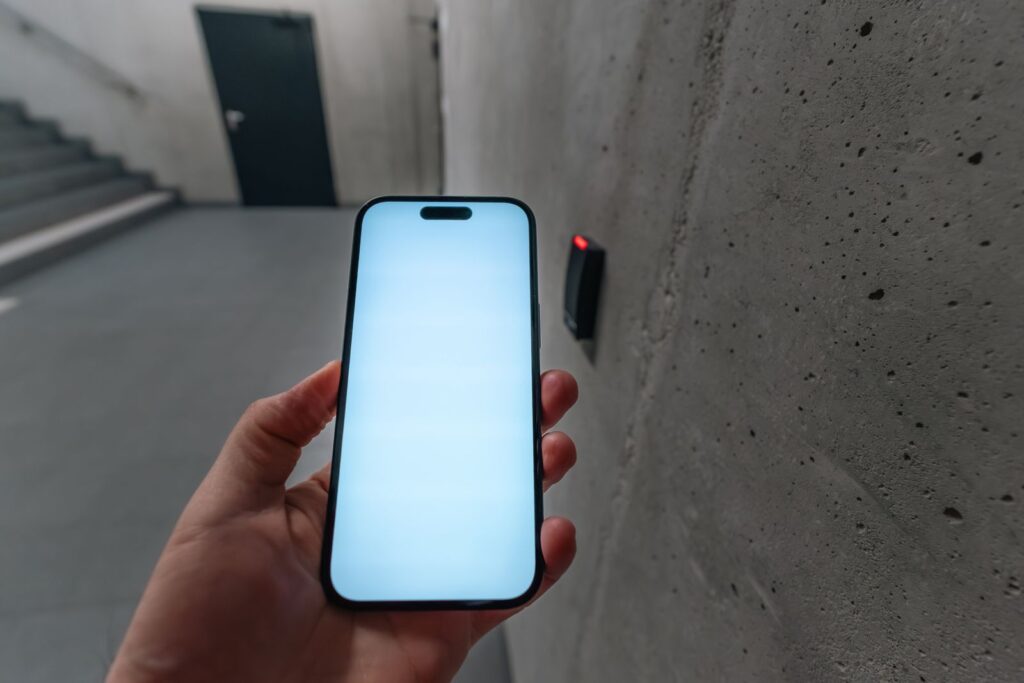
Coverage is broader than GAMSTOP’s. A ROFUS registration blocks online gambling from operators licensed in Denmark and also applies at land-based casinos and at betting in shops. When a registered player tries to log in, open an account, walk into a casino or buy a bet over a counter, the operator can see the registration. Registering also automatically signs the player up to the “No thanks to gambling ads” scheme, which licensed operators check before sending marketing.
Players can take a 24-hour break, exclude themselves for one, three or six months, or register permanently. A permanent registration carries a commitment period of one year and seven days: after a year the player can ask for deletion by logging in with MitID, then must confirm the request between day 7 and day 30. That second login is a deliberate speed bump, and a clever one. It turns a decision made in a single moment into one that has to be made twice, a week apart.
Netherlands: how Cruks turns a BSN into a code
The Dutch register, Cruks, is run by the Kansspelautoriteit (KSA). Players register with DigiD, which blocks them from Dutch-licensed gambling sites, arcades and casinos immediately, or with a postal form that takes a few days. The details entered must match the player’s identity document exactly; the KSA says a gambling stop can only be recorded when all the data matches 100%. Terms run from six months to 99 years, the first six months cannot be shortened, and a registration ends automatically when its period runs out.
The design means that no gambling company needs to keep a database of citizen service numbers, and the code one operator holds for a player is not the same as the code another operator holds for them. The KSA can also register a player in Cruks following a notification about problematic gambling behaviour, an involuntary route comparable in spirit to the third-party exclusions Germany allows.
The Dutch approach checks a player against the register without ever letting the operator keep the national ID number it used to ask. That is the kind of design detail most exclusion schemes never get round to.
Germany: what an OASIS query returns
Germany’s cross-product register, OASIS, is run by the Regierungspräsidium Darmstadt, and connecting to it is mandatory for gambling operators. It reaches further across product types than any register discussed here: online casino games, online poker, sports betting, virtual slot machines, betting shops, arcades, horse racing bets online and lotteries drawn more than twice a week.
The stored record includes surname, first name, date of birth, place of birth, address, any other names used and the grounds for the exclusion. Operators query on surname, first name and date of birth only, and the system answers with one of two statements: the player is blocked, or the player is not blocked. Applications to add or remove a block can now be made fully online, using a BundID account and the online identification function of an ID card.
Several German design choices go further than elsewhere.
- A self-exclusion lasts a year by default. A player can ask for a shorter individual term, but never below three months.
- It does not end automatically. After the minimum period the player has to apply in writing to lift it.
- Relatives or partners can apply for a third-party exclusion, with evidence such as addiction, over-indebtedness or stakes out of proportion to income. Those exclusions last at least a year.
- A 24-hour emergency block, a panic button, is available for online sports betting, casino games, poker and virtual slots.
Design choices compared
Put the registers next to GAMSTOP and each one looks like a different answer to the same trade-offs: how short a break to allow, whether an exclusion should expire by itself, and how far beyond online play it should reach.
| Design question | GAMSTOP | Spelpaus | ROFUS | Cruks | OASIS |
|---|---|---|---|---|---|
| Shortest period | 6 months | 10 days | 24 hours | 6 months | 24-hour panic button online; 3 months for a self-exclusion |
| Longest period | 5 years, with optional auto-renewal | Indefinite, minimum 12 months | Permanent, deletable on request after a year | 99 years | Set individually; 1 year by default |
| Ends on its own? | No, you contact the scheme | Fixed periods do | Temporary ones do | Yes | No, written application needed |
| Identity at registration | Personal details | BankID, Freja eID+ or foreign eID | MitID | DigiD | BundID with online ID card function |
| Covers land-based gambling? | No; separate schemes for shops and casinos | Yes, licensed gambling requiring registration | Land casinos and shop betting | Dutch-licensed arcades and casinos | Yes, including arcades and betting shops |
No column wins outright. GAMSTOP’s six-month floor and refusal to lapse automatically are protective, but it offers nobody a quick cooling-off switch. Denmark and Germany do, yet a 24-hour block is little use to someone who needs months. The Dutch register expires on schedule, which respects autonomy and also means a relapse can start the day after. These are policy choices, and each country has made them for its own residents.
Why does none of this reach Great Britain?
There are two separate reasons, one legal and one technical, and either would be enough on its own.
The legal reason is licensing. Each register binds the operators its own regulator licenses and nobody else. Spelpaus is a condition of a Swedish licence, Cruks of a Dutch one, and so on. Great Britain works the same way. Point-of-consumption licensing, introduced by the Gambling (Licensing and Advertising) Act 2014 from 1 November 2014, means the Gambling Commission licenses whoever sells remote gambling to people here, regardless of where the servers or head office sit, and section 33 of the Gambling Act 2005 makes unlicensed provision a criminal matter. A site licensed only in Malta, Sweden or anywhere else has no right to take British customers, and the European register attached to its home licence was never designed for them.
The technical reason is identity. Three of the four registers lean on national identity schemes: BankID in Sweden, MitID in Denmark, DigiD and the citizen service number in the Netherlands. A typical British resident has none of those credentials, so even the matching layer has nothing to match against. The alternative routes (Sweden’s procedure for people without e-ID, Denmark’s form 9-01, the Dutch postal form and the non-BSN data set) exist, but they still only bind operators licensed in those countries.
The reverse is also true. A GAMSTOP registration has no effect at a Swedish, Danish, Dutch or German licensee. Somebody who has excluded in Britain and turns to a European-licensed site that accepts British players is outside every register described on this page. If that describes you, our guide to non Gamstop casinos explains what extra layers, such as bank blocks and device blockers, do reach those sites.
What is the British equivalent stack?
Britain gets to a comparable level of protection through a collection of separate tools rather than one identity-linked register. Mapped function by function, it looks like this.
| Function | British component | Closest European counterpart |
|---|---|---|
| Online self-exclusion | GAMSTOP, mandatory for all online licensees since 31 March 2020 | Spelpaus, ROFUS, Cruks, OASIS |
| Betting shop exclusion | Gamstop Betting Shops, formerly MOSES | Built into ROFUS, Spelpaus and OASIS |
| Land casino exclusion | SENSE | Built into ROFUS, Cruks and OASIS |
| Identity | Operator-run age and identity verification before deposit or play, since 7 May 2019 | National eIDs such as BankID, MitID and DigiD |
| Affordability | Financial vulnerability checks using public records at £150 net deposits in a rolling 30 days | Varies by country |
| Spending limits | Prompt to set a financial limit before first deposit; increases need at least 24 hours of cooling-off | Varies by country |
| Checking a licence | Gambling Commission public register, searchable by account number or domain | National licence lists, such as Germany’s whitelist |
| Payment-level blocking | Gambling blocks in banking apps, offered by Monzo, Starling, Barclays, Lloyds, NatWest and others | Not part of the registers described here |
The weak point in the British stack is the matching layer. Without a national identifier, GAMSTOP compares the details you register with the details you give an operator. It asks for every email address, phone number and postal address you use, and says it works best when those are kept up to date. A registrant whose details have changed since signing up, and who has not updated them, gives the match less to work with. A login tied to a national eID does not have that problem in the same way. The strong points are elsewhere: one scheme covers every online licensee, it cannot be shortened, and it never quietly lapses.
What the British route costs you
We send readers only to Gambling Commission licensees, including European groups that hold a British licence for their British-facing site. That route has real drawbacks, and some are sharper than in parts of Europe.
Plus
- A single online exclusion scheme that no licensee can opt out of
- Free, independent ADR once the operator’s complaints process has run
- Insolvency protection level for your balance disclosed up front
- Games built to the Commission’s Remote Technical Standards
- Bonus wagering capped at 10x from 19 January 2026
Minus
- No quick cooling-off option in GAMSTOP; the shortest term is six months
- Exclusions split across three schemes for online, shops and casinos
- Details-based matching instead of a national digital ID
- Slot stakes capped at £5 (25+) or £2 (18 to 24) per spin
- Promotions squeezed by remote gaming duty of 40% from 1 April 2026
If the six-month minimum is what puts you off, licensed operators offer their own time-outs and deposit limits inside the account, and a bank block with a short cooldown can do a similar job at the payment level. Neither is as strong as GAMSTOP, but both sit inside the regulated system.
Checking a European group’s British licence
Many of the big continental operators run a separate British-facing site under a Commission licence. Some smaller operators do too; our independent casinos guide covers those. The check takes a couple of minutes.
- Look for the Gambling Commission statement on the gaming screens. Licensees must show that they are “licensed and regulated in Great Britain by the Gambling Commission” with an account number.
- A multinational footer often names four or five regulators. Only one of them matters for play from Britain, so find it in the list.
- Search the account number or the domain on the Commission’s public register and confirm the status is Active.
- Match the exact domain in your browser with those declared on the account, since groups often run different domains for different countries.
- Check the site mentions GAMSTOP and names a British-approved ADR provider on its complaints page.
Questions on European casinos
Does a European self-exclusion stop me at a British casino?
No. Spelpaus, ROFUS, Cruks and OASIS bind only operators licensed in their own countries. To exclude from British-licensed online gambling you need GAMSTOP.
Does GAMSTOP use a national ID number?
No. It matches the details you register, including names, date of birth, email addresses, phone numbers and postal addresses, against the details you give operators. Keeping every address and email on file improves the match.
Why do Dutch operators delete my citizen service number?
Because the rules require it. After the KSA returns an encrypted Cruks code for the player, the operator stores that code and must destroy the BSN it used to request it.
Does a German OASIS block end automatically?
No. After the minimum period, which is three months or more for a self-exclusion, the player has to apply in writing for it to be lifted.
Which European register allows the shortest break?
Denmark’s ROFUS offers a 24-hour break, and Germany has a 24-hour panic button for several online products. Sweden’s Spelpaus starts at 10 days. GAMSTOP’s shortest period is six months.
Can a casino licensed in another European country accept British players?
Not lawfully, unless it also holds a Gambling Commission licence covering that site. Its home licence gives it no standing here, and serving British customers without the Commission licence is a criminal offence for the operator.
Is a European-licensed casino safer than a British one?
Some European rules are stricter than British ones in specific areas. But the protections are written for that country’s residents and tied to its register, so they do not follow you if you play from Britain at a site without a British licence.
PCZ verdict
Europe’s registers are impressive pieces of engineering, particularly the Dutch code system that keeps national ID numbers out of operators’ databases, and Britain can fairly be criticised for relying on details-based matching and three separate schemes. None of that changes the answer for a British player. Every one of those registers is bound to its own country’s licences and, in most cases, its own digital identity, so a European-licensed site serving Britain without a Gambling Commission licence brings none of the protection with it. Our conclusion is to use European brands only through their British-licensed sites, confirmed on the public register, and to judge the British stack on the protections it actually delivers.
18+ only. Gambling is entertainment that costs money, so set a limit you are comfortable losing and stop when you reach it. Advisers at the National Gambling Helpline (0808 8020 133) take calls free of charge, in confidence, 24 hours a day, and a GAMSTOP registration shuts you out of British-licensed online gambling for the term you pick. PCZ covers only operators licensed by the UK Gambling Commission. Updated September 2026.