

I’ll be honest with you: while the rest of the world was losing their collective minds over herbs and typewriters, I was usually busy elsewhere. I’ve dabbled with Resident Evil across the decades, but the hook never quite bit deep enough to turn me into a full-blown Umbrella apologist. I survived the sweaty, first-person claustrophobia of the Baker guest house. I rolled my eyes at the Euro-trash gothic pantomime of Village. But Requiem is the moment the penny finally dropped — loudly, irreversibly, and with a wet thud that would feel right at home in this game’s sound design.
Capcom has spent the better part of fifteen years having a very public mid-life crisis about whether they want to be Amnesia or Gears of War. Requiem is the moment they stopped agonising, poured themselves a large drink, and simply served up the whole bloody buffet at once. It’s a schizophrenic, high-budget nightmare that refuses to compromise, and I am, rather to my own surprise, completely obsessed. This isn’t just another sequel grinding through franchise obligations. It’s the definitive “have your cake and shoot it too” moment for the series — and it pulls it off with the kind of confidence that only comes from a studio that has finally, genuinely, stopped being embarrassed about what it is.
Saving Grace
The game operates like a hot sauna followed immediately by a cold plunge pool, and it does this deliberately and brilliantly. The sauna is Grace Ashcroft — FBI analyst, daughter of RE Outbreak‘s Alyssa Ashcroft, and the most compelling new Resident Evil protagonist in years. She finds herself dragged through a series of locations that share one quality in common: nobody should be there, and everyone who is has had a very bad day. Rhodes Hill Care Centre is where it begins, and it sets the tone efficiently — which is to say, horribly.
Playing as Grace is Resident Evil at its absolute, white-knuckled best. She is not a human tank. She cannot absorb gunfire and keep moving. She does not have Leon’s preposterous action-hero constitution, which Leon has presumably maintained through a punishing regime of cryogenic storage and refusing to age. What Grace has instead is resourcefulness, fear, and an inventory screen that you will agonise over at two in the morning with the same intensity usually reserved for actual life decisions.

Every item you carry is a negotiation with yourself. That extra stack of handgun ammo, or the Hemolytic Injector that lets you silently destroy T-cell infected zombies from behind? The laser microscope needed to unlock new crafting recipes, or the space for the upgrade component you’ll probably not find again? The resource management here is not the tedious busywork it sounds like in description — it is the game’s central emotional engine. When you hear something moving in the dark and check your inventory and find it comprehensively inadequate, the anxiety that produces is entirely genuine and entirely horrible, which in this context is the highest possible compliment.
The pacing of Grace’s chapters, the economy of information, the way the game teaches you its systems through creeping dread rather than tutorial boxes — all of it is masterclass level. When you pick your first lock and the game quietly awards the “Like Mother, Like Daughter” achievement, and you work out what that means if you know your Outbreak lore, it’s the kind of moment that reminds you why this franchise has endured for thirty years. Capcom are not just recycling their history here. They’re curating it with genuine affection.
The Kennedy Carnival
Then the camera cuts to Leon S. Kennedy, and Requiem sheds its skin entirely.
Leon’s sections are fast, violent, and unashamedly Mercenaries in tone. He’s got the parrying hatchet. He’s got the one-liners, delivered with exactly the amount of self-awareness you’d want from a man who has been saving the world since 1998 and has the cheekbones to prove it. He has a considerably more liberal supply of gunpowder, and he uses all of it, cheerfully, while apparently enjoying himself. If Grace’s chapters are the tension, Leon’s are the release — a pressure valve that opens precisely when you need it, letting you exhale and enjoy being very good at violence before the game quietly screws the anxiety back up again.
The contrast works because neither mode compromises for the other. Grace doesn’t get action set-pieces to make her feel empowered; Leon doesn’t get resource management puzzles to make him feel vulnerable. Each half trusts the player to enjoy both on their own terms, which is a structural confidence that is rarer in game design than it should be.
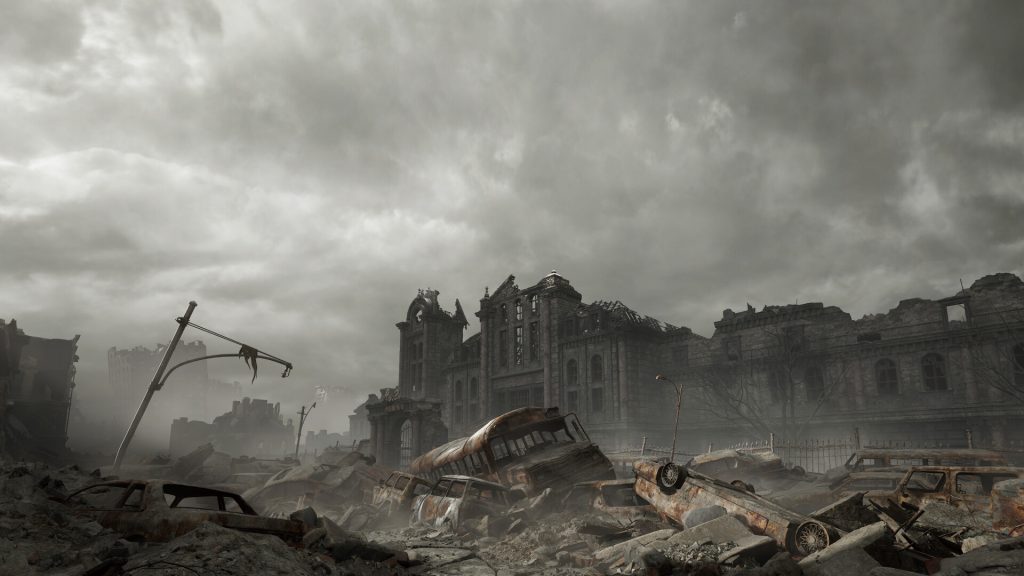
Both characters move through a range of locations across the campaign — some visited separately, some together — each with its own atmosphere, demands, and particular brand of misery. But of everything the game has to offer, the location that stopped me cold, and that I suspect will be what people are still talking about years from now, is the ruins of Raccoon City — ash-covered, devastated, and hauntingly recognisable to anyone who has spent time in the RPD. Exploring the remains of the RPD and the surrounding streets is a greatest hits tour of survival horror history that should feel like fan service and somehow feels earned instead, mostly because Capcom has rendered it with genuine reverence.
The streets carry weight. The silence has texture. When you spot Tofu — yes, that Tofu, the legendary block of bean curd from the RE2 extra modes — shuffling past an RPD window in the background, you will snort out loud at whatever ungodly hour you’re playing and feel entirely justified. It is buried precisely where only the faithful will find it, which is exactly how Easter eggs should work. A reward for paying attention, not a tooltip.
The Sanguis Virginis wine bottle — Lady Dimitrescu’s private vintage, a direct nod to Village — sits on a shelf in a location so well-placed it feels less like a wink and more like a love letter. And returning to the RPD to find Leon’s infamous “Welcome” party banner finally spelled correctly, with the two rogue L’s from the 1998 original hidden elsewhere in the same room as a deliberate joke, is the kind of detail that makes you put the controller down and quietly appreciate the people who made this. They remembered. They always remembered.
The Villain Problem
Here is where I have to be honest in a way that the 95% score might not immediately suggest.
Requiem builds two antagonists — Victor Gideon and the creature designated Zeno — with considerable patience and craft. The early game does real work establishing Gideon as a credible threat, someone whose particular brand of cold ideological menace feels like a worthy successor to the franchise’s better villains. The dread that accumulates around Zeno through the mid-game is handled with genuine atmospheric intelligence. Both feel, for a good stretch, like they might go down in series history.
“You arrive expecting a reckoning. You get a checklist with atmosphere.”
And then you actually fight them. And something deflates.
The boss encounters for both are, frankly, beneath the game that surrounds them. Gideon resolves into a sequence that feels rushed against the build-up invested in him — a climax that arrives before the story has finished earning it. Zeno, a creature the game has spent considerable time and effort making you genuinely afraid of, turns out to be a “shoot the glowing weak points” proposition that wraps up with a convenience bordering on anticlimax. You arrive expecting a reckoning. You get a checklist with atmosphere.
This matters more than a minor complaint because Resident Evil’s great boss encounters are inseparable from its great moments — the Tyrant on the rooftop, Nemesis appearing at every inconvenient possible corner, Marguerite Baker in her greenhouse. When a Resi villain lands, it lands forever. Victor Gideon had the potential to join that list. That he doesn’t is a genuine missed opportunity, and the honest version of this review has to name it clearly rather than bury it in a qualifying clause at the end of an otherwise glowing paragraph.
The 20-hour runtime compounds this slightly. The quality of those hours is high — consistently, impressively high — but the brevity means the villain problem hits harder than it would in a longer game with more room to rebuild momentum afterwards. You’re left wanting more, and not entirely in the good way.
The RE Engine: Running While Others Are Still Compiling Shaders
A necessary word about the technology, because it feeds directly into why Requiem feels the way it feels.
In an era where a significant proportion of major PC releases arrive as Unreal Engine 5 stutter-fests that seize up every time a new area decides to have a nervous breakdown over shader compilation, Capcom’s continued commitment to their proprietary RE Engine is beginning to look less like stubbornness and more like quietly being right. Requiem runs. It runs consistently, it runs well, and it runs with a stability that increasingly feels remarkable rather than standard.
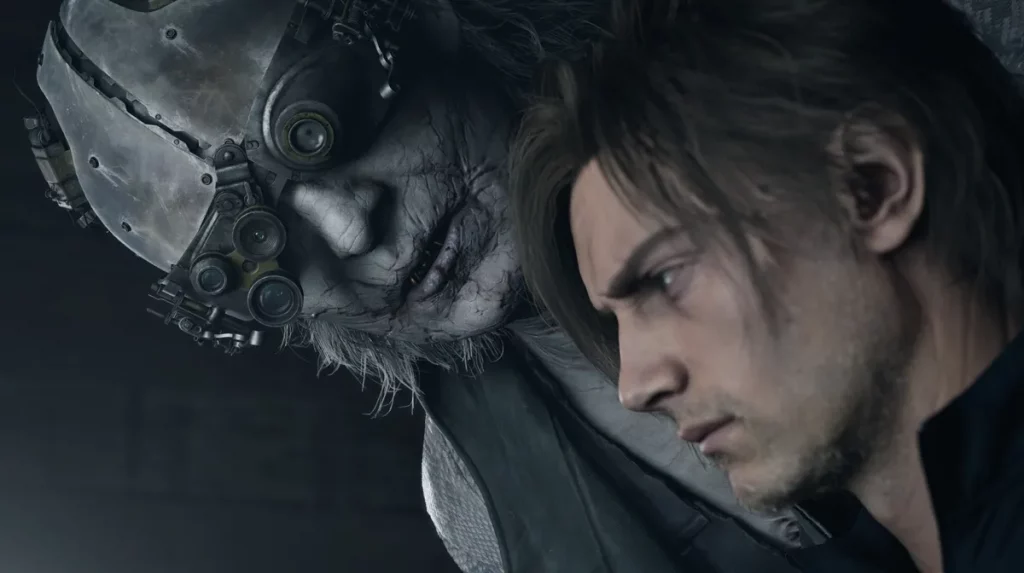
The real showpiece here is the game’s path tracing implementation, which the RE Engine supports with impressive results. Shadows pool in corners with physical weight. Grace’s hair — rendered with strand technology that makes the character models here some of the most detailed in any current PC release — catches light with a fidelity that genuinely stops you in the middle of a corridor to stare at it, which is exactly the behaviour you should avoid in a survival horror game. The path-traced Raccoon City sections under Leon feel genuinely photographic in places, the kind of visual quality that justifies the GPU upgrade you’ve been putting off. DLSS 5 and it’s “yassifying” controversy aside, this is a bang on tech showpiece.
Practical notes for those of you reading this while your computer makes concerning noises: path tracing will push many mid-range setups into DLSS or FSR Performance mode to maintain a stable frame rate. On an RTX 3070 or 4060, Ray Tracing: Normal at 1440p delivers a solid 60fps and still looks excellent. Full path tracing at that hardware tier is a benchmark mode rather than a playing mode — impressive to look at, less impressive to experience at 22fps. VRAM usage spikes to around 12GB with path tracing enabled at 4K. On an 8GB card, dropping Shadow Quality to High resolves the bottleneck with negligible visual cost, and your GPU will thank you in its own silent way.
The Verdict
Resident Evil: Requiem is not a perfect game. The villains don’t deliver on their promise. Twenty hours feels slightly short for a world this carefully constructed. These are real criticisms from someone who wanted more of it, and they’re worth your attention before you hand over sixty pounds.
But when you’re creeping through a pitch-black corridor as Grace with three handgun rounds and a crafting component you’re not sure you can spare, or bulldozing through waves of lumbering Tyrants as Leon while he delivers a one-liner that suggests he is having considerably more fun than is strictly appropriate — when you’re in Requiem, genuinely in it — those criticisms recede to a comfortable distance.
This is a masterclass in tonal balance, a technical showcase that makes the RE Engine look like the best-kept secret in game development, and the most compelling argument yet that Raccoon City still has decades of life left in its ruins. For a reformed Resi sceptic, it’s the game that finally, properly, made the case. Capcom stopped trying to choose. Turns out that was the answer all along.
Essential. Bring a torch. Don’t bother reading the lore beforehand — it won’t help, and honestly, that’s part of the charm.
Reviewed on: RTX 5070 Ti / 32GB DDR5 / Ryzen 7 7800X3D — tested at 1440p and 4K